

 Tulisan ini bagian dari sistem kesadaran reflektif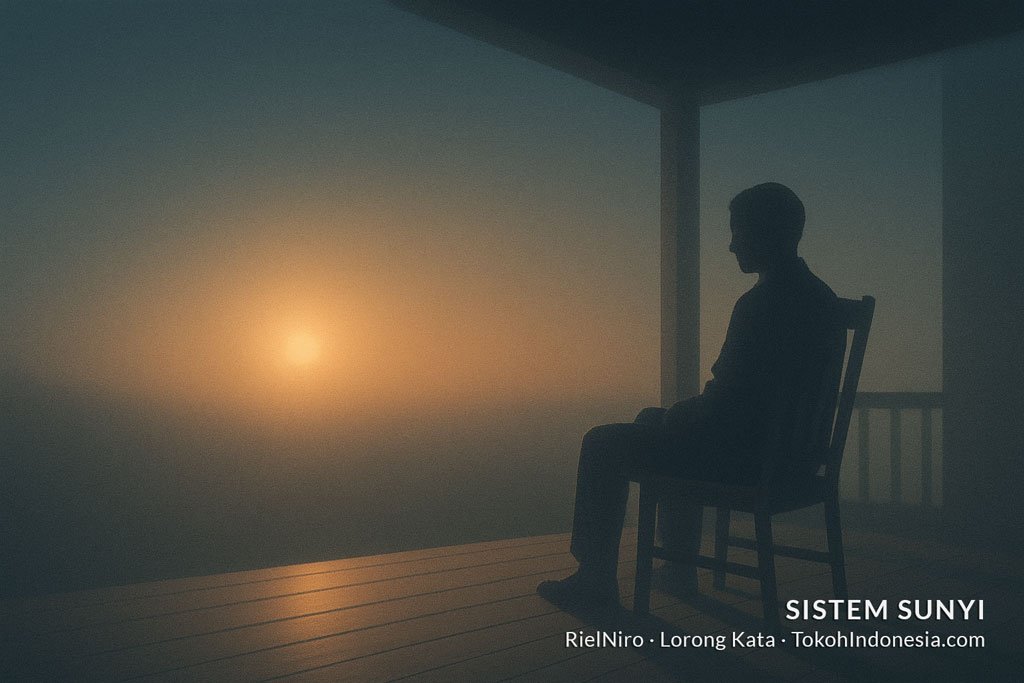
No one is ever truly ready for loss. Even when the time comes, the inner life still looks for reasons to refuse it. Yet within the silence that cannot be avoided, human beings learn one simple thing: that life keeps moving, not to forget, but to find a new form of the love that once existed.
The days after that departure felt long and empty. They went through the usual morning routine, but even making coffee or turning on the living room lamp no longer felt ordinary. Every object in the house seemed like a silent witness, not because it did not care, but as if it understood too much.
When someone they love departs, the world does not stop, but steps that once felt ordinary suddenly become strange. They tried to hold back their tears and keep busy so the mind would not have time to sink. Yet busyness only reflected the same emptiness.
One afternoon, they sat in silence for no particular reason, no longer forcing themselves to be strong or resisting the tightness within. Sorrow no longer felt frightening. It became a kind of call, not to be understood right away, but to be heard, so they could recognize what was moving within. In that silence, they slowly learned to stop resisting.
Learning to Accompany the Self
The following days moved slowly. They began arranging a small space in the house, cleaning the cupboard, keeping away clothes that were no longer worn. Every small movement became a way of speaking with the past. They did not know whether it was a form of prayer or merely habit, but every step brought a little calm.
They began to understand: loss is not absence, but a change in the form of presence. Someone once loved does not truly disappear; their presence becomes a memory that gradually shapes one’s posture and the way the day is seen. This awareness did not come from other people’s words, but from an experience that slowly calmed itself.
When Reflection Finds No Answer, Faith Holds the Way
One night, they sat on the veranda as the wind passed without direction. They were not trying to think anything through or pray for anyone; they were simply sitting in silence. Yet within that quiet, something felt present. Not an answer or a light, but a gentle trust: that life still knows the way, even when they themselves do not know where to go.
They did not call it God, but sensed something greater than themselves, something that held life in motion and helped their feelings endure. This was how faith appeared to them at that moment: not as a complete explanation, but as a gentle trust that helped them keep going without fully understanding the loss.
From then on, they no longer kept asking “why” and began saying “thank you.” Not because they understood the loss, but because they were slowly making peace with not knowing.
A Quiet Acceptance
Time does not erase loss. It only makes it possible to arrange.
Now, every morning still feels lonely, but that loneliness no longer hurts in the same way. They begin to speak with memory without being afraid of being carried away by its current. Sometimes they smile, sometimes tears fall, but everything feels honest, no longer heavy.
They begin to understand that love does not stop at separation. It finds a new form in silence, in the way someone tends memory while remaining gentle toward life.
And at that point, they realize: loss is not about the one who has gone, but about how the heart learns to remain alive afterward.
The Core Meaning of the Case
Loss first opens the way to feeling,
when that feeling is heard, meaning slowly finds its place.
Faith holds the direction when not everything can be understood,
allowing acceptance to grow without erasing longing.
Loss is not a sign that love has ended, but proof that love has found a home wider than the body.
Silent Steps – Accompanying the Self After Loss
After passing through loss, many people ask: how does one live again without half of the self that has gone?
There is no fixed formula, but small steps can help us move gently while keeping the direction of return toward the self. The Orbit references below illuminate the aspect of experience touched by each step; they do not mark levels to be climbed.
1. Allow feeling to be present without condition.
Do not rush to calm yourself. Let the tears come without needing to explain them. The feeling of loss is not a sign of weakness, but a sign that the heart is still alive. Silence begins when human beings stop resisting feeling.
This reading is close to the Psychospiritual Orbit and the idea in The Theory of Inner Echo that feeling is an early doorway to awareness.
2. Tend the small everyday things.
Simple tasks at home, such as washing dishes, sweeping the floor, or tidying the table, affirm that life is still here. When the body moves, the inner life slowly begins to recover. Small order gives new form to days that once collapsed.
These small acts can be read through the Existential-Creative Orbit and the idea in The Aesthetics of Inner Discipline that order grows from awareness, not compulsion.
3. Speak with memory, do not fight it.
Memory is not an enemy; it needs to be tended gently. Looking at photos, reading old messages, or praying for the one who has gone can be ways of staying connected without deliberately reopening the wound. Love does not stop at parting; it only changes its way of being present.
This step touches the Relational Orbit, where a bond can be cared for without ownership. That idea is close to The Ethics of Feeling, which invites people to sustain relationships through presence and inward resonance.
4. Sit in silence without seeking meaning.
Not every loss can be explained. Sometimes calm comes not because one understands, but because one trusts. At this point, faith works as light, not blinding, but enough to guide the next step.
This experience can also be read through the Metaphysical-Narrative Orbit. In the spirit of The Philosophy of Resonance, connectedness is not always captured by logic alone and may be felt when the inner life stops forcing an answer.
5. Live again, slowly.
Begin from the simplest things: leaving the house, speaking with someone else, feeling the evening wind. Loss does not ask us to forget; it only teaches how to live without half of the self, until in the end, that half becomes light within the self.
This step points back toward the Center, where feeling, meaning, and faith can hold one another as an orientation for life. Returning home does not mean that loss no longer hurts, but that there is still a direction from which to keep living.
Nothing is ever truly lost within love. What departs is only its form; what remains is its meaning. Every small, quiet step is a way of returning home to oneself.
Tulisan ini merupakan bagian dari Sistem Sunyi, sebuah sistem kesadaran reflektif yang dikembangkan secara mandiri oleh Atur Lorielcide melalui persona batinnya, RielNiro.
Setiap bagian dalam seri ini saling terhubung, membentuk jembatan antara rasa, makna, iman, dan kesadaran yang terus berputar menuju pusat.
Sistem Sunyi lahir dari perjalanan batin manusia, bukan dari mesin atau algoritma. Ia tumbuh dari luka, jeda, doa, dan keberanian untuk diam. Orbit, spiral, dan gema bukan formula buatan, melainkan kosmologi yang muncul dari pengalaman hidup yang jujur.
Untuk memahami asal-usulnya lebih jauh, lihat juga Origin Story Sistem Sunyi: Ruang Orientasi · · · .
Pengutipan sebagian atau keseluruhan isi diperkenankan dengan mencantumkan sumber: RielNiro – TokohIndonesia.com (Sistem Sunyi)
Tulisan Inti: Pengantar
Sistem Sunyi berangkat dari pengalaman manusia dan berusaha memahami bagaimana pengalaman itu berhubungan dengan Rasa, Makna, dan Iman. Pusat, Spiral Kesadaran, dan Empat Orbit membentuk kerangka untuk membaca hubungan tersebut, sekaligus menempatkan pengalaman batin dalam konteks kehidupan yang lebih luas.
Tulisan-tulisan dalam kategori ini memperkenalkan asal-usul, fondasi, dan cara kerja Sistem Sunyi. Pembaca dapat menelusuri kerangkanya tanpa menyamakan peta dengan pengalaman manusia yang hendak dipahami.
Jelajahi berdasarkan kelompok fungsional, atau buka daftar kanonik lengkap untuk melihat seluruh 32 tulisan sesuai urutan sumber.
Jalur berdasarkan fungsi
Kelompok ini merupakan cara lain menjelajahi tulisan, bukan pengganti urutan kanonik.
Fondasi dan orientasi (2 tulisan)
Menjadi gerbang umum yang merangkum arsitektur dan cabang ekosistem; bukan pengganti tulisan khusus tiap konsep.
Origin Story (5 tulisan)
Bagian awal perjalanan naratif yang melahirkan cara membaca Sistem Sunyi.
Mengembangkan pengalaman asal menjadi pembacaan konseptual atas Rasa, Makna, dan Iman.
Menggambarkan pengalaman setelah guncangan sebagai bagian dari perjalanan asal yang ikut membentuk cara Sistem Sunyi membaca pengalaman manusia.
Menandai sikap batin yang tumbuh dari pengalaman asal dan membantu menjelaskan bagaimana seseorang dapat tetap berada dalam perjalanan tanpa harus menjauh dari dirinya sendiri.
Berfungsi sebagai peta naratif bagi fragmen-fragmen Origin Story, bukan sekadar kisah tunggal.
Simbol dan jangkar konseptual (1 tulisan)
Memadatkan pengalaman asal Sistem Sunyi ke dalam lambang konseptual: Shield menjaga pusat tanpa menyerang, Kompas memberi orientasi ketika arah lama runtuh, dan Orbit Pusat menata fragmen agar tidak tercerai. Alur Rasa–Makna–Iman menjadikan tanda ini pengingat asal-usul dan arah pulang, bukan kelanjutan kisah Origin Story.
Fondasi pembacaan manusia (1 tulisan)
Menjadi penjelasan tentang titik mula epistemik dan sikap pembacaan Sistem Sunyi terhadap pengalaman manusia.
Panduan membaca (3 tulisan)
Menetapkan sikap dan batas dasar pembaca ketika memasuki tulisan-tulisan Sistem Sunyi.
Memetakan jalur baca dan memberi orientasi tentang tahap yang dapat ditempuh pembaca. Fungsinya membantu menentukan arah membaca, sementara Atlas memperlihatkan hubungan dan arsitektur Sistem Sunyi.
Berfungsi sebagai gerbang reflektif untuk menentukan apakah dan bagaimana pembaca ingin masuk.
Akses dan orientasi ekosistem (2 tulisan)
Menjadi perangkat pencarian untuk menemukan materi berdasarkan kebutuhan, bukan penjelasan konseptual tentang sistem.
Memperkenalkan simpul navigasi utama yang membantu pembaca menemukan titik masuk sesuai kebutuhan dan menentukan ke mana pembacaan dapat dilanjutkan.
Arsitektur dan keterhubungan Sistem Sunyi (1 tulisan)
Atlas bukan sekadar indeks atau daftar bacaan; fungsi utamanya memperlihatkan hubungan dan arsitektur kesadaran, dengan navigasi sebagai fungsi pendamping.
Posisi dan batas pembacaan (3 tulisan)
Menempatkan Sistem Sunyi dalam perjumpaannya dengan berbagai disiplin dan tradisi pemikiran, sekaligus menjelaskan batas perbandingan agar persinggungan tidak dianggap sebagai kesamaan.
Menyatakan posisi Sistem Sunyi secara langsung, sehingga pembaca dapat memahami pijakan dan batas kerangka ini tanpa harus terlebih dahulu menelusuri perjumpaannya dengan disiplin lain.
Menetapkan batas teologis dan posisi iman dalam Sistem Sunyi agar sunyi tidak diperlakukan sebagai pengganti iman.
Prinsip dan jangkar konseptual (1 tulisan)
Menguraikan hubungan ego, Pusat, dan keutuhan sebagai prinsip konseptual dalam Sistem Sunyi. Pembahasannya berada pada tingkat pemahaman tentang Pusat, bukan sekadar petunjuk untuk kembali ke sana.
Fondasi konseptual (2 tulisan)
Menjelaskan poros utama sistem, bukan peta keseluruhan atau mekanika Spiral secara rinci.
Memperjelas kedudukan Iman, Pengharapan, dan Kasih dalam pembacaan Rasa Sistem Sunyi. Tulisan ini berhubungan dengan Tritunggal Rasa–Makna–Iman, tetapi membahas lapisan nilai dan daya batin yang tidak dapat begitu saja disamakan dengannya.
Mekanika dan model kesadaran (4 tulisan)
Menjelaskan bagaimana struktur batin menjadi gerak: rasa yang dilihat atau ditahan, Resonansi Makna, Gravitasi Iman, Orbit Kebiasaan, Momentum Kesadaran, dan Gradien Sunyi memengaruhi gerak Spiral. Istilah fisika di sini adalah metafora mekanis, bukan klaim ilmiah literal; Spiral membantu membaca perpindahan dari reaktif menuju reflektif tanpa menjadi tangga moral.
Memusatkan perhatian pada dinamika internal Spiral Kesadaran dan prinsip yang menjelaskan geraknya. Fokusnya adalah cara kerja, bukan hanya susunan tahap yang dapat dilihat pada peta Spiral.
Membahas mekanisme spesifik yang dapat menggeser gerak kesadaran kembali ke pola lama.
Memberi model dasar untuk memahami cara kerja Spiral Kesadaran dalam Sistem Sunyi. Tulisan ini menjadi landasan pembacaan mekanisme, sedangkan tulisan-tulisan peta memperlihatkan susunan, lapisan, dan hubungan di dalam arsitekturnya.
Arsitektur dan peta kesadaran (6 tulisan)
Menyatukan arsitektur kesadaran dalam satu peta: Empat Orbit memberi struktur ruang belajar batin, Spiral menunjukkan ritme geraknya, dan gravitasi Iman menjaga arah pulang. Peta ini memperlihatkan hubungan struktur, gerak, dan pusat tanpa mengubahnya menjadi jenjang rohani.
Memperlihatkan susunan besar Empat Orbit dan Spiral dalam satu kerangka, sehingga pembaca dapat melihat hubungan keduanya pada tingkat arsitektur sebelum memasuki uraian mekanisme yang lebih rinci.
Menyajikan gambaran keseluruhan empat lapisan Spiral Kesadaran dalam satu peta, agar susunan lapisan dapat dibaca sebagai bagian dari satu arsitektur.
Memperlihatkan hubungan dua arah gerak batin dalam arsitektur Spiral Kesadaran, dengan perhatian khusus pada relasi yang ditunjukkan oleh model Spiral Ganda.
Memusatkan pembacaan pada lapisan ketiga Spiral Kesadaran sebagai bagian khusus dari keseluruhan arsitektur Spiral.
Memusatkan pembacaan pada lapisan keempat Spiral Kesadaran sebagai bagian khusus dari keseluruhan arsitektur Spiral.
Klarifikasi dan pertanyaan pembaca (1 tulisan)
Berfungsi sebagai rujukan tanya-jawab, bukan urutan utama atau penjelasan tunggal seluruh sistem.
Daftar kanonik lengkap — Pengantar (32 tulisan)
- Tentang Sistem Sunyi
- Dari Sesuatu yang Tidak Selesai
- Rasa, Makna, dan Iman: Membaca yang Tidak Selesai
- Setelah Guncangan
- Tidak Pergi ke Mana-Mana
- Peta Besar Fragmen: Dari Sesuatu yang Tidak Selesai
- Tanda Pusat Sistem Sunyi
- Dari Mana Sistem Sunyi Memulai Membaca Manusia?
- Jalan Menuju Sunyi
- Cara Membaca Sistem Sunyi
- Peta Alur Membaca Sistem Sunyi
- Apakah Sistem Sunyi Cocok untuk Saya?
- Mesin Pencarian Sistem Sunyi
- Tentang Pusat Orientasi Sistem Sunyi
- Membaca Sistem Sunyi Lewat Atlas
- Sistem Sunyi di Persimpangan Disiplin
- Posisi Sistem Sunyi
- Nol yang Menggenapkan
- Sunyi, Iman, dan Jalan Pulang
- Tritunggal Sistem Sunyi: Rasa ↔ Makna ↔ Iman
- Dinamika Batin & Spiral Kesadaran: Zona Mekanisme Sistem Sunyi
- Fisika Spiral Kesadaran
- Orbit Kebiasaan: Lintasan Default dan Tarikan Balik Sistem Sunyi
- Peta Kesadaran Sistem Sunyi
- Rasa Sistem Sunyi: Iman, Pengharapan, Kasih
- Peta Sistem Sunyi: Rangka Kesadaran Empat Orbit
- Spiral Kesadaran: Cara Sistem Sunyi Bekerja
- Peta Spiral Sistem Sunyi – Empat Lapisan Kesadaran
- Peta Spiral Ganda Sistem Sunyi
- Peta Spiral Ketiga Sistem Sunyi
- Peta Spiral Keempat Sistem Sunyi
- F.A.Q. Sistem Sunyi
Tulisan Inti: Penutup
Kategori Penutup memuat tulisan yang memperluas pembacaan Sistem Sunyi ke dalam kehidupan, praktik, dan berbagai bentuk karya. Di sini, kerangka yang telah dikenali bertemu dengan pengalaman yang terus berjalan dan berkembang.
Tulisan-tulisan di dalamnya mencakup perjalanan dan kepulangan, pengembangan cabang ekosistem, medium ekspresi, ruang praktik, hingga cara membaca fenomena. Perbedaan fungsi di antara perangkat, pengalaman, dan bentuk perwujudan tetap menjadi bagian dari peta Sistem Sunyi.
Jelajahi berdasarkan kelompok fungsional, atau buka daftar kanonik lengkap untuk melihat seluruh 19 tulisan sesuai urutan sumber.
Jalur berdasarkan fungsi
Kelompok ini merupakan cara lain menjelajahi tulisan, bukan pengganti urutan kanonik.
Integrasi dan kepulangan (4 tulisan)
Menutup perjalanan inti dengan sintesis arah Sistem Sunyi dan makna pulang.
Mengendapkan perjalanan naratif dan mengembalikan perhatian pada kehidupan yang terus berlangsung setelah cerita selesai. Dalam arsitektur Origin Story, tulisan ini juga menjadi bagian dari perjalanan yang melahirkan cara membaca Sistem Sunyi.
Menekankan keberlanjutan laku setelah sintesis epilog; pulang menjadi cara berjalan, bukan titik akhir.
Menjadi catatan reflektif singkat setelah Epilog dan Coda, dengan fungsi sebagai tambahan penutup, bukan pengulangan sintesis Epilog atau uraian laku setelah pulang dalam Coda.
Asal-usul cabang dan bentuk karya (2 tulisan)
Menjelaskan asal-usul dan fungsi Esai Resonansi sebagai bentuk ekspresi yang tumbuh dari kesadaran dan gema pengalaman dalam ekosistem Sistem Sunyi.
Menempatkan Fraktal sebagai kelanjutan alami dari gema, bukan sistem yang berdiri sendiri.
Dialektika dan penjernihan makna (1 tulisan)
Memperkenalkan dua format Dialektika Sunyi: penjernihan istilah populer melalui cara baca Sistem Sunyi, dan dialog dua arah dengan 24 rumah pemikiran yang tetap membawa sejarah serta rumah konseptual masing-masing. Keduanya menjernihkan perbedaan dan membuka ruang koreksi tanpa penyerapan.
KBDS dan ekosistem istilah (1 tulisan)
Memperkenalkan fungsi, cakupan, dan perkembangan KBDS sebagai perangkat untuk menelusuri istilah serta hubungan makna dalam ekosistem Dialektika Sunyi.
Extreme Distortion: posisi dan batas (1 tulisan)
Menjelaskan hubungan dan perbedaan kedua kerangka agar ED tidak disamakan dengan Sistem Sunyi atau dipahami sebagai sistem terpisah.
Extreme Distortion: mekanika (1 tulisan)
Berfokus pada mekanisme internal ED; berbeda dari tulisan sebelumnya yang terutama membedakan posisi dua kerangka.
Pengamatan dan pembacaan fenomena (2 tulisan)
Memperkenalkan ruang observasi untuk mencatat dan membaca jejak yang ditemukan di luar ekosistem formal Sistem Sunyi, tanpa langsung menempatkannya sebagai bagian dari perangkat internal ekosistem.
Memperkenalkan praktik membaca fenomena secara langsung melalui pendekatan Sistem Sunyi. Fokusnya adalah proses pembacaan itu sendiri, bukan pencatatan jejak yang ditemukan di luar ekosistem formal.
Medium ekspresi dan resonansi (1 tulisan)
Memperkenalkan musik sebagai ruang ekspresi dan resonansi dalam ekosistem Sistem Sunyi, serta menjelaskan kedudukan Jejak Sunyi dalam Musik di antara bentuk-bentuk karya dan pembacaan lainnya.
Praktik dan penghayatan (2 tulisan)
Menjelaskan Ruang Praktik sebagai ruang penghayatan dan penerapan Sistem Sunyi, sehingga pembaca dapat membedakan pengalaman praktik dari penjelasan konseptual tentang sistem.
Memperkenalkan Litani Sunyi sebagai bentuk khusus praktik sunyi yang berpusat pada satu napas untuk kembali ke Pusat, sekaligus menjelaskan batas maknanya dalam ekosistem Sistem Sunyi.
Medium visual dan naratif (3 tulisan)
Memperkenalkan infografik sebagai bentuk visualisasi konsep Sistem Sunyi yang membantu pembaca melihat susunan atau hubungan gagasan melalui representasi visual.
Memperkenalkan komik sebagai bentuk naratif visual yang membawa pengalaman manusia ke dalam cerita, sehingga gagasan Sistem Sunyi dapat dijumpai melalui pengalaman yang dituturkan.
Memperkenalkan wallpaper dan koleksi visual sebagai bentuk pengingat serta resonansi visual dalam keseharian, dengan fungsi yang berbeda dari infografik yang memvisualisasikan konsep dan komik yang menyampaikan pengalaman melalui narasi.
Manusia, karya, dan perwujudan (1 tulisan)
Memperlihatkan hubungan antara kerangka Sistem Sunyi, sosok RielNiro, dan karya yang tumbuh di dalam orbitnya, tanpa menjadikan sosok atau karyanya sebagai pusat dari keseluruhan sistem.
Daftar kanonik lengkap — Penutup (19 tulisan)
- Epilog Sistem Sunyi: Pulang ke Pusat
- Sesudah Semua Cerita
- Asal Muasal Esai Resonansi: Dari Kesadaran ke Gema
- Awal Mula Seri Fraktal: Dari Gema ke Pola
- Mengenal Dialektika Sunyi
- Tentang Kamus Besar Dialektika Sunyi (KBDS)
- Tentang Extreme Distortion vs Sistem Sunyi
- Mekanika Extreme Distortion
- Tentang Jejak Sunyi di Luar
- Apa Itu Pembacaan Sunyi
- Apa Itu Jejak Sunyi dalam Musik
- Tentang Ruang Praktik Sistem Sunyi
- Litani Sunyi: Satu Napas untuk Kembali ke Pusat
- Tentang Infografik Sistem Sunyi
- Tentang Komik Sistem Sunyi
- Tentang Wallpaper & Koleksi Visual Sistem Sunyi
- Coda Sistem Sunyi: Menjaga Keheningan Setelah Pulang
- RielNiro dan Orbit Sunyi
- Postscript Sistem Sunyi
Tulisan Inti: Studi Kasus
Studi Kasus membawa pembacaan Sistem Sunyi ke dalam pengalaman konkret. Fokusnya bukan menyederhanakan pengalaman menjadi rumus, melainkan mengikuti bagaimana rasa muncul, bagaimana makna mulai terbaca, dan bagaimana seseorang dapat menemukan kembali arah ketika berhadapan dengan kehilangan, kehampaan, atau kegagalan.
Ketiga tulisan dalam kategori ini bergerak melalui pengalaman yang berbeda: belajar mendengar setelah kehilangan, menghadapi hidup yang tampak penuh tetapi tidak terasa hidup, dan menemukan kemungkinan jalan pulang setelah jatuh. Pengalaman-pengalaman tersebut menjadi bahan pembacaan, bukan diagnosis atau resep yang berlaku sama bagi setiap orang. Sistem Sunyi hadir sebagai cara untuk memperhatikan apa yang sedang dialami dan membuka ruang bagi pemahaman yang tumbuh dari dalam pengalaman itu sendiri.
Daftar berikut memuat tiga tulisan inti kategori Studi Kasus.
Tulisan ini membawa pembacaan Rasa, Makna, dan Iman ke dalam pengalaman kehilangan. Duka tidak segera ditutup oleh penjelasan; rasa diberi ruang untuk didengar, makna tumbuh melalui perubahan bentuk kehadiran, dan iman menjaga arah ketika jawaban belum ditemukan.
Tulisan ini mempertemukan cara membaca Sistem Sunyi dengan kehampaan yang dapat muncul ketika kehidupan terus berjalan, tetapi tidak lagi terasa hidup. Fokusnya adalah jarak antara kepenuhan aktivitas dan kehadiran batin, serta kemungkinan mendengarkan kembali pengalaman yang selama ini tertutup oleh kesibukan.
Tulisan ini membawa pembacaan Sistem Sunyi ke dalam pengalaman kegagalan dan kemungkinan kembali ke Pusat. Jatuh membuka ruang untuk meninjau ulang cara seseorang memahami dirinya dan arah hidupnya, tanpa menjadikan kegagalan sebagai jaminan pertumbuhan atau keharusan untuk segera menemukan hikmah.
Atur Lorielcide berjalan di antara kata dan keheningan.
Ia menulis untuk menjaga gerak batin tetap terhubung dengan pusatnya.
Melalui Sistem Sunyi, ia mencoba memetakan cara pulang tanpa tergesa.
Lorong Kata adalah tempat ia belajar mendengar yang tak terlihat.
Baca juga: Dua Ruang, Satu Sunyi: Jejak Atur Lorielcide alias Rielniro